Thursday, 17 May 2012

Hermit Crab

The hermit crab has a soft under-body which it protects by carrying a shell on its back. The shell of the hermit crab is not its own, but one that belonged to another animal. As hermit crabs grow, they continue to find larger shells to accomodate their increasing size. Hermit crabs are omnivorous animals that eat pretty much anything they can find in the surrounding water. Small fish and invertebrates including worms, are the most common prey for the hermit crab along with plankton and other food particles in the water.

Blue Heron


The great blue heron found inhabiting parts of North America and as far west as the Galapagos Islands is the largest species of heron in the world and can measure nearly a meter in height. The smallest species of heron in the world is the green heron measuring less than 50 cm tall. The green heron is most commonly found in North America and Central America, and occasionally in Hawaii. All 64 different species of heron are very similar in body shape but not in size and colour. All herons have long pointed beaks which helps them to grab fish out of the water, along with long necks and thin, long legs both of which are useful to the heron as it lives it's waterside lifestyle. Herons also have enormous wings that can be nearly double the size of the heron's body.


Highland cattle


Highland cattle originally come from Scotland. Highland cattle can now be found in Europe, North America and Australia, where the highland cattle are all commonly farmed for their meat but some people also use the long hair of the highland cattle. Highland cattle have adapted to living in such harsh terrains as highland cattle have a large, strong build and a thick double layer of long orange hair. Highland cattle also have two horns on the tops of their heads which the highland cattle use to dig through thick snow to find the vegetation that lies underneath and the highland cattle also use their horns in order to defend themselves from oncoming predators and other rival highland cattle.


WHY DO COWS GIVE MILK


WHY DO COWS GIVE MILK?
People have used milk for food from ancient times, and have developed certain animals to supply large amounts of milk. We depend on cows to supply most of our milk, but in Spain, for example, the sheep is one of the chief milk-producing animals.

Many desert tribes depend on the camel for milk, and in Egypt, they use water buffaloes. In Peru, the llama is a milk-producing animal. People in many countries use goat's milk.

Milk is the fluid secreted by the mammary glands of the animal are food for their young in the period immediately after birth. It takes the place of the blood which supplied the young with nutrition before it was born. In fact, it is exactly like blood, only without the red blood cells and the blood pigment.
The composition of milk varies quite a bit, depending on the species of the animal which produces it. But milk always contains fat, protein, carbohydrate, and minerals. Goat's milk, for instance, contains twice as much fat as cow's milk, and the milk of reindeer contains five times as much fat as cow's milk!
The milk of every animal also contains various salts according to the needs of its young. The more rapid the growth of the newborn, the more salts in the mother's milk. A cow doubles its original weight at birth in 47 days, but a human being does it in 180 days. That's why cow's milk is too rich in proteins and salts and must be diluted for feeding newborn children.

The milk produced by cows varies depending on many factors. One, of course, is the breed of cow and the constitution of the individual cow. Another is the time between milkings. The last milk to be drawn at each milking is richer in fat then the rest. So, if a cow has not been completely milked, it will probably have fatter milk next time.
Since green food is the main source of vitamins for the cow summer milk is usually richer than winter milk, when the cow can't walk about in the pasture. About 110 grams of food solids are contained in each litre of milk. The most important solids are the butterfat, the casein, the milk sugar, and the minerals.

WHAT IS THE FASTEST FOUR-LEGGED ANIMAL


WHAT IS THE FASTEST FOUR-LEGGED ANIMAL?
Man is very proud of his speed. After all, don't we zoom through space faster than sound itself can travel? Don't we fly across oceans in a few hours?
What man should really be proud of in these cases is his brain, which has enabled him to develop machines that can go at fantastic speeds. For when it comes to his body, he is very far indeed from being the speed champion among mammals. In fact, he ranks quite low.

Let's take a look at the speeds at which some four- legged creatures can travel. We must remember, however, that many animals capable of great speed cannot sustain this speed for a long time. Man himself, who can run 22 to 25 miles (35 to 40 kilometer) per hour, can hold this during a race such as a 200 metre dash, but not in a longer race! Also, these speeds are not scientifically exact. They are based on reports and observations which various people have made at different times. But they give you a pretty accurate idea of how animals compare in speed.

The champ of them all is the cheetah, a kind of leopard; it has reached 70 miles per hour! The black-buck comes next at 65 miles per hour. At about 60 miles per hour, we have the Mongolian gazelle and the Pronghorn antelope. Any of these animals mentioned would outdistance all other mammals is a race of over a mile or so.

The lion, surprisingly enough, can change after his enemy at a speed of 50 miles, but he can't keep it up. A deer which most of us consider a very fast animal, only goes at about 45 or 50 miles an hour, and that's about the speed of a race horse!

Another animal that is used in racing, the Greyhound, goes at about 35 to 40 miles- only a few miles faster than a grizzly bear! And an elephant has been known to make a dash at 25 miles an hour!

Saturday, 12 May 2012

HOW WERE THE MOUNTAINS MADE


HOW WERE THE MOUNTAINS MADE?
Because mountains are so big and grand, man thinks of them as unchanging and everlasting.But Gelolgists,the scientists who study mountains,can prove that mountains do change, and that they are not everlasting.
Certain changes in the earth's surface produced the mountains , and they are constantly being destroyed and changed. Boulders are broken from mountain sides by freezing water; soil and rock particles are carried away by rainwash and streams.In time, even the highest mountains are changed to rolling hills or plains.

Geologists divide mountains into four classifications , according to how they are formed. All mountains, however , are the result of violent changes in the earth's surface, most of which happened millions of years ago.

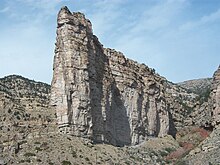
Folded mountains were made of rock layers, squeezed by great pressure into large folds. In many places in such mountains , you can see the rock layers curving up and down in arches and dips, caused by the sqeezing and pressure on the earth's surface.The Appalachian Mountains and the Alps of Europe are examples of folded mountains.

In dome mountains, the rock layers were forced up to make great pressure from below the earth's surface, lifted these rock layers.The Black Hills of south Dakota are examples of dome mountians.
Block mountains are the result of breaks,or faults, int earth's crust.Huge parts of the earth's surface, entire ''blocks'' of rock, were raised up or tilted at one time. The Sierra Nevada Range of Clifonia is a block that is 400 miles long and 80 miles wide!
Volcanic mountains are built of lave,ash, and cinders poured out from within the earth. The usual volcano is cone-shaped with a large hole, or crater, at the top. Among the famous volcanic mountains are Mounts Ranier, Shasta, and Hood in the United States, Fujiyama in Japan , and Vesuvius in Italy.
Many mountain ranges have been formed by more than one of the ways described. In the Rockies are mountains made by folding, faulting, doming, and even erosion of lava!

WHAT IS THE JET STREAM


WHAT IS THE JET STREAM?
Nowadays, the word ''jet'' is very much in the news, and you might imagine that the ''jet stream'' has something to do with jet planes. This isn't the case at all!
The jet stream is part of the system of winds that surround the earth, so let;s start with the subject of winds. Wings are currents of air that move parallel to the surface of the earth and close to it.

The movement of winds is chiefly caused by the existence of areas of different pressure, and winds always blow from areas of high pressure to areas of low pressure.

If we look at it from an over-all point of view (not from local region) we can say that, in general, cold air is transported from the poles toward the Equator, and warm air from the Equator toward the Poles. This flow doesn't take place in smooth surrents, but forms a system of rather turbulent streams. There are various conditions that decide what happens in each specific region. There may be local sources of heat which affect the pressure.The way the land and water and mountains are distributed can decide which way the local winds blow.
Finally, there is the existance of semi-permanent.

WHERE DO MOST EARTHQUAKES OCCUR


WHERE DO MOST EARTHQUAKES OCCUR?
If you could look at a map that showed the entire surface of the earth and where earthquakes occur most often, you'd see a wavy ribbon that twisted up and down as it twisted around the earth. Some parts are missed entirely; others seem to have a habit of having frequent earthquakes.

         The single region of the earth that has the most frequent earthquakes is Japan. There is an earthquake there almost every day of the year! Of course, most of these are very minor quakes and do no damage at all. Another region which has frequent earthquakes is the Mediterranean area. By contast, consider the New England States. There have been no destructive earthquakes there since the Ice Age, many thousands of years ago!

The explanation for this is that the crust of the earth is not the same everywhere. In certain regions, the crust has not quite settled down firmly,and there is a ''fault''. A fault is a break in the rocks of the earth's crust.Where the break exists, one rock mass rubs against another with great force and friction. The energy of this rubbing is changed to vibration in the rocks.
While this vibration may travel thousands of miles, the earthquake is strongest , as you might imagine, right along the line of the fault made by the shifting of the earth blocks. The sides of the fault may move up and down against each other, or the sides of the fault may shift lengthwise.
Most of the changes that take place on the surface of the earth after an earthquake are seen along this fault line.The part of the fault line where the vibration is felt most strongly is called ''the epicenter'' of the earthquake. And if this is near a city, the destruction may be very great. The loss of life is usually due to falling buildings and fires that may be started by broken gas mains under streets.
The earthquake regions of the earth and the areas of recent volcanic activity are roughly the same. This is because both of these are regions where the earth's crust is not at rest.

WHAT IS HUMIDITY


WHAT IS HUMIDITY?
If ou put a pitcher of ice water on a table and let it stand a while, what happens? Moisture gathers on the outside of the pitcher. Where does this moiture come from? It comes from the air.

The fact is there is always moisture in the air in the form of water vapor. In the case of the ice pitcher, the vapor condensed on th cold surface of the pitcher and thus became visible. But water capor in the air is in visible. And the word ''humidity'' simply means the presence of water vapor in the air. It is found everywhere ,even over great deserts.
This means, of course , that we always have humidity, but the humidity is not always the same. We have several ways of expressing the humidity, and two of them are ''absolute humidity'' and ''relative humidity.'' Let's see what each means.

''Absolute humidity'' is the quantity of water vapor in each unit volume of air. There are so many grains per cubic foot of air. But for most practical purposes, this doesn't tell us very much. If you want to know wheter you'll feel comfortable or not, the answer ''four grains per cubic foot'' won't tell you whether the air will feel dry or humid. The more easily moisture from your body can evaporate into the air, the more comfortable you'll be. The evaporative power of the air depends on the temperature, and absolute humidity doen't indicate anything about the evaporative power of the air.
Relative humidity is expressed as a percentage. ''One hundred per cent'' stands for air which is saturated or completely filled with water vapor. The higher the temperature, the greater the quantity of water vapor air can hold.Thus, on a hot day, a ''90 per cent relative humidity'' means an awful lot of moisture in the air-a day that will make you mighty uncomfortable.

WHAT IS FOG


                                 WHAT IS FOG?
A fog is a cloud in contact with the ground. There is no basic difference between a fog and a cloud floating high in the atmosphere. When a cloud is near or on the surface of the earth or sea, it is simply called ''fog.''
The commonest fogs are those seen at night and in the early morning over the lowlands and small bodies of water. They usually are caused by a cold current of air from above striking down upon the warmer surface of the land or water.
In the autumn they are very common, because the air is cooling faster day by day than the land or the water.On still nights after dark, thin layers of fog often form close to the ground in low places. As the earth cools at night, the lower air gets cooler. Where this cooler air meets the moist warmer air just above, fog forms.

As a general rule, city fogs are much thicker than country fogs. City air is full of sut and soot that mingle with tiny particles of water to form a thicker blanket.

Off the coast of Newfoundland, which is one of the foggist parts of the world, fogs are formed by the passage of damp, warm air over the cold water flowing south from the Arctic Circle. The chill of the water condenses the moisture of the air into tiny drops of water. These drops are not big enough to fall as rain. They remain in the air as fog.
San Francisco fogs are formed in the opposite way. There a cool morning breeze blows over warm sand dunes, and if rain has moistened the sand the night before, a thick fog bank of evaporated moisture forms.
The reason fogs often seem denser than clouds is that the droplets are smaller in a fog. A large number of small drops absorb more light than a smaller number of large drops (as found in clouds), and thus it seems denser to us.